
Doctor of Philosophy in Nursing (PhD)
Need your questions answered?
OVERVIEW
Transform the future of health
Advance the theoretical foundation of nursing practice and healthcare delivery with a Johns Hopkins PhD in nursing. This program will provide you with the knowledge and skills in theoretical, methodological, and analytical approaches that will enable you to conduct research to discover and apply knowledge in nursing science and health care. Most full-time Johns Hopkins Nursing PhD students receive 100% tuition funding and guaranteed compensation for the first four years of study.
The Johns Hopkins School of Nursing specializes in eight Areas of Expertise. With access to world-renowned nursing faculty in these specialties, cutting-edge facilities, and opportunities for interdisciplinary collaboration with noted researchers throughout Johns Hopkins University, you’ll build the skills to develop and implement a scientific research program and launch your career. By graduation, most Hopkins nurse scholars have been awarded grants that continue their research and set them well on their way to a successful career.
Program Details
Tuition & Fees
Most full-time Johns Hopkins Nursing PhD students receive 100% tuition funding and guaranteed compensation for the first four years of study.
Estimated Tuition Cost: $2,454 per credit See Cost of Attendance Details
Financial Aid: There are numerous options for financing your education including grants, scholarships, and federal loans. Learn more.
Upcoming Application Deadlines
Fall entry: November 15
Requirements
Admission Criteria
Graduate of an accredited Bachelor’s or Master’s in Nursing Program (if applicable. Applicants holding a degree in a non-nursing related discipline will be considered on an individual basis)
A written statement of research goals including reason for interest in Johns Hopkins
Research interests that match faculty expertise and School of Nursing resources
GRE scores are accepted but not required
A minimum scholastic GPA of 3.0 on a 4.0 scale
Interview with faculty (if moved forward by admissions committee)
Writing sample of applicant’s original work (publication or graded paper)*
Resume or curriculum vitae
Three letters of recommendation (two academic, one professional)*
Official Transcripts (from all previous colleges/universities)
Prerequisites
No prerequisite courses.
*References should be recent, written for the purpose of your application to this program and from professors who know you as a student or employers who know you as a professional in a job setting preferably in a supervisory role. Personal references from colleagues, friends, or family members do not meet the requirement. For PhD applicants, it is strongly preferred that a least one of your recommenders holds a PhD.
The admissions committee requires applicant writing samples to assess the potential capacity for rigorous scientific writing. Writing samples should represent works in which the applicant is the primary author signifying that you were significant contributors to the conceptualization, writing, and editing of the work. Writing samples should be no less than 1000 words.
PhD profile based on Fall 2025 Enrollment
32%
Underrepresented Minority
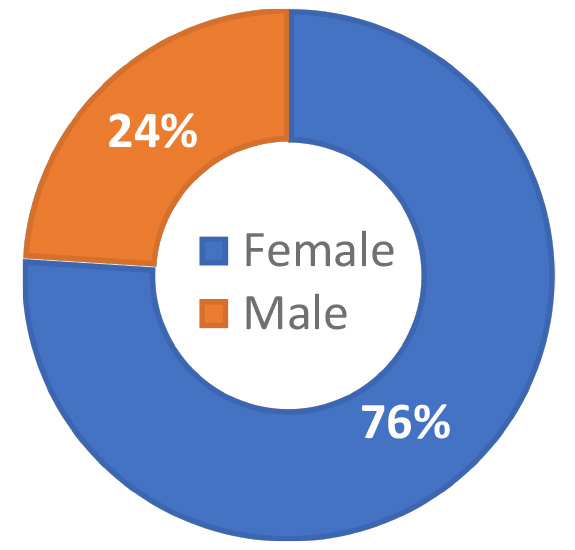
76% Female/24%% Male
9
Countries Represented
8
States Represented
35
Average Age
Curriculum
Each student completes a core curriculum and works closely with faculty advisors to complete an individualized course of study that fulfills the student’s goals and develops the basis for a program of research.
Full Curriculum
- Philosophical Perspectives in Health
- Scientific Perspectives in Nursing
- Introduction to Quantitative Research Design and Methods
- Advanced Quantitative Research Design and Methods
- Qualitative Research Design and Methods
- Mixed Methods Research Design
- Grant Writing Seminar
- Measurement in Health Care Research
- Responsibilities and Activities of the Nurse Scientist
- Statistical Methods in Public Health I
- Statistical Methods in Public Health II
- Statistical Methods in Public Health III
- Advanced Nursing Health Policy
- Stress and Stress Response
- The Evolving Roles of the Nurse Educator (online)
- Statistical Methods in Public Health IV
- Writing for Publication (online)
- International Health Systems and Research 3
- Critical Applications of Advanced Statistical Models
- Technology and eTools to Conduct, Facilitate, Implement and Manage Research (online)
- Scholarly Research Portfolio for PhD Students
- Dissertation Seminar
- Dissertation
Sample Course of Study
- Philosophical Perspectives in Health
- Introduction to Quantitative Research Design and Methods
- Statistical Methods in Public Health I & II
- Qualitative Research Designs and Methods
- Scholarly Research Portfolio for PhD Students
- Scientific Perspectives in Nursing
- Advanced Quantative Study Designs and Methods
- Mixed Methods Research Design
- Statistical Methods in Public Health III
- Scholarly Research Portfolio for PhD Students
- Measurement in Health Care Research
- Grant Writing Seminar
- Comprehensive Examination
- Scholarly Research Portfolio for PhD Students
- Dissertation Seminar*
- Electives (10 credits)
- Scholarly Research Portfolio for PhD Students
- Dissertation Seminar*
- Responsibilities and Activities of the Nurse Scientist
- Electives (9 credits)
- Scholarly Research Portfolio for PhD Students
- Preparation for Doctor of Philosophy Board Preliminary Oral Examination
- Scholarly Research Portfolio for PhD Students
- Scholarly Research Portfolio for PhD Students
- Dissertation Seminar*
- Dissertation*
*PhD students having successfully completed the written Comprehensive Examination must be registered for at least six (summer) or nine (fall/spring) credits consisting of two-eight credits Scholarly Research Portfolio plus one credit Dissertation Seminar each semester they are progressing toward the degree.
*Part-time students who have completed the Comprehensive Examination must register for two credits dissertation advisement plus one credit dissertation seminar each semester they are progressing toward the degree after completing half (10) the required elective credits.
*Up to a maximum of 6 credits can be transferred into the PhD Program.
**Per Doctor of Philosophy Board policy, students must either be registered during fall, spring, and summer semesters, or be on an approved leave of absence.
***Transfer of credit is granted on an individual basis. Please see the transfer of credit policy and **complete the form to make a request.
“Prior to joining the PhD program, I felt like I was spinning my wheels. Now I feel empowered to advocate for what I know will help patients and have the tools and soon will have the credentials to do that.”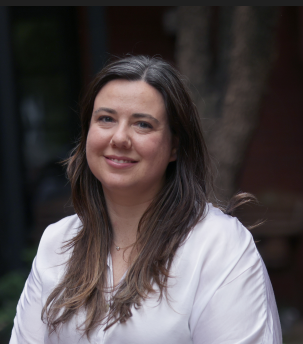 Emily Hoppe, MS, BSN, RN
Engage with Us
Join us soon for a tour, on-campus event or a virtual visit.
Request Information
Speak with Admissions to learn more about our programs.
Virtual Info Sessions
See recordings of some of our recent virtual info sessons.
Tuition & Other Costs
View the costs for the PhD Program.
2026-2027
Financial aid
Scholarships & Grants: Grants are awards based on financial need that do not have to be repaid. Many students also benefit from scholarships and awards based on merit. Learn more.
Loans: Many students will avail themselves of loans to help finance their School of Nursing education. If necessary, we encourage you to borrow only what is absolutely essential to cover your educational costs. Learn more.
Funding
Per the Collective Bargaining Agreement (CBA) with the JHU PhD Union, the minimum guaranteed 2026-2027 academic year stipend is $52,000 for all PhD students . Tuition, fees, and medical benefits are provided, including health insurance premiums for PhD student’s children and spouses of international students, depending on visa type. The minimum stipend and tuition coverage is guaranteed for at least the first four years of the School of Nursing (SON) PhD program; specific amounts and the number of years supported, as well as work expectations related to that stipend will vary across departments and funding source. Please refer to the CBA to review specific benefits, compensation, and other terms.
Students who are admitted to PhD programs at JHU can apply to receive a need-based grant to offset the costs of relocating to JHU. Thes grants provide funding to a portion of incoming students, who, without this money, may otherwise not be able to afford to relocated to JHU for their PhD program. This is not a merit-based grant. Applications will be evaluated solely based on financial need. For more information, visit the Office of the Provos webpage on Need-based Relocation Grants for Incoming PhD Students.
Additionally, international students who are covered by the CBA and incur visa fees specifically for study in a PhD program at JHU are eligible to receive a reimbursement through the International Employee Fund.
Frequently Asked Questions
The research area in an admission application should be well-defined but not overly rigid. Candidates should demonstrate a clear focus within their field of interest, outlining specific research questions or problems they aim to address. The proposal should show a solid understanding of current literature and gaps in knowledge, indicating how their research could contribute to the field. While applicants may have a general idea of their methodology and potential outcomes, there should be room for refinement and adaptation as they progress in their studies. The research area should align with the program’s strengths and faculty expertise. Overall, the essay should reflect the applicant’s understanding of the issue, and critical thinking skills, and potential for conducting meaningful research, while still allowing for guidance and development throughout the program.
Although contacting a faculty member in your research area is not required, it is an opportunity to become familiar with researchers in your area of interest and to ask questions not addressed on the school’s website. While it can be helpful to have a direct match, students often have great success in the program when a piece of the research overlaps with the advisor. If there is a particular faculty member whose work interests you, you may discuss this as part of your application essay. The best place to start is with the PhD Assistant Director of Recruitment, Cesar Nuñez at [email protected] and with a review of our most recent PhD virtual information session at https://nursing.jhu.edu/admissions/ask/program-specific-recorded-events/.
Once you are admitted to the PhD program , the PhD Admissions Committee determines who will be your advisor(s). Generally, two co-advisors are assigned. We match students with faculty members who have similar research interests.
The PhD program prepares the nurse scholar to develop and conduct scientific research that advances the theoretical foundation of nursing practice and healthcare delivery. The program is designed to prepare nurses for careers as research scientists, often in academic or governmental positions.
The DNP program prepares nurse leaders for evidence-based practice in both direct patient care and executive roles. View Comparison Chart
The time needed to complete the program varies, depending on how fast you progress. Some students in our program finish their degree in three years, others take four years or longer.
Students whose native language is not English are required to take the Test of English as a Foreign Language (TOEFL). Johns Hopkins School of Nursing requires a minimum TOEFL-IBT score of 100 to be eligible for admission. More
The PhD program has a Biostatistics heavy curriculum so previous coursework in Biostatistics is helpful. We encourage students that have not had previous coursework in this area, or have not taken the coursework in the past five years, to look for ways to strengthen that knowledge base before matriculating into the program. Please reach out to Cesar Nunez, Assistant Director of Recruitment, at [email protected] for a list of resources to help you prepare while applying and before matriculating into the program.
GRE scores are accepted but not required.
The PhD program is a full time, onsite program only.
Students should expect to spend 2-3 hours per week outside the classroom for every 1 credit in required coursework. For example, a 3-credit course requires 6-9 hours reading, studying, writing, or other assignments outside of classroom time. Full-time students should plan to work 15 hours per week on their funded research residency in collaboration with their faculty supervisor for all four years that they receive guaranteed funding. Part-time students should expect to spend 5-10 hours per week on their research residency experience. All required courses are delivered in-person over four years, and students should expect to be in a classroom setting for learning during this time period.
Coursework completed outside the United States must be evaluated and translated into US equivalencies. Official transcript evaluations must be submitted as part of the application process, and applications will not be considered complete until all evaluations for any work completed outside the United States are received. The Johns Hopkins School of Nursing recommends WES-ICAP.