
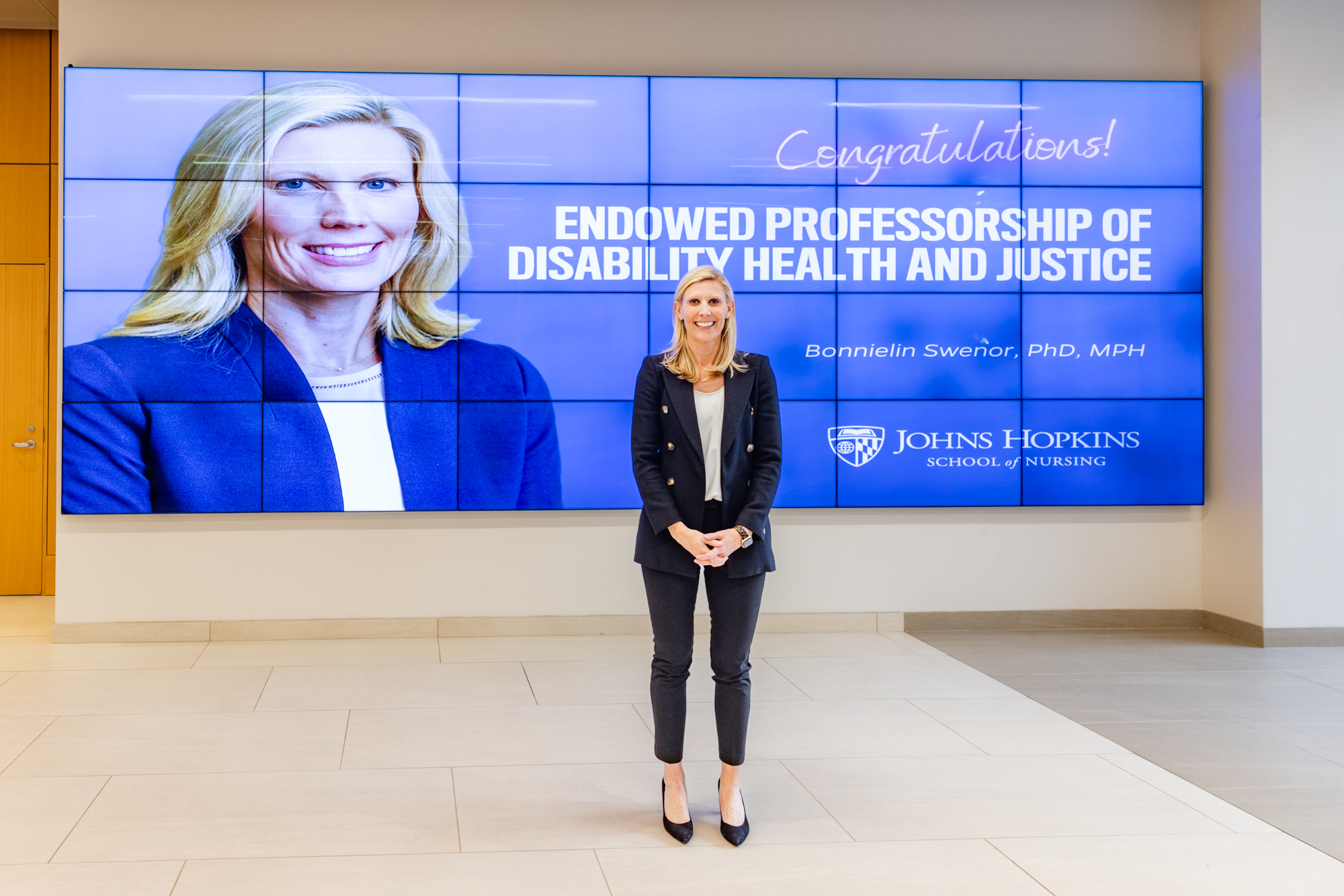
For decades, disability research has tended to follow a familiar path: identify a medical condition, measure its impact, and examine its limitations. But Dr. Bonnie Swenor approaches disability from a different angle. Dr. Swenor is the founder and director of the Johns Hopkins Disability Health Research Center. Her career has been defined not just by research, but by a deep belief that the way we think about disability, and the way systems respond to it, must fundamentally change. And she is not waiting for that change to arrive. She is building it.
Disability, she argues, is not an endpoint of illness or injury; it is a demographic group, a community, and a global reality that tells us more about our systems than it does about individuals.
“We have to stop treating disability as a peripheral issue,” she explains. “It is a central part of public health. It’s a population, and populations deserve equity.”
That shift in thinking seems simple at first glance, but its implications reach everywhere. Data collection, policy building, educational practices, and the design of entire health systems come into play. When disability becomes the starting point rather than the outcome, the barriers that people face cease to be personal burdens and instead become evidence of inequitable systems. And once you see that, it can’t be unseen.
Where Research Meets Purpose
Dr. Swenor’s research is grounded in that clarity. Her team works alongside disabled people, not as subjects of inquiry, but as partners, co-designers, and leaders. Their lived experience shapes the direction of the research, the tools being built, and the solutions being proposed.
“In every project, we ask: who holds the power?” she explains. “Because if disabled people aren’t at the table, then the work won’t solve the right problems.”
In this model, data becomes a form of empowerment. Visibility becomes a form of dignity. Research becomes a mechanism for lasting change.
And that change is happening in real time. Dr. Swenor’s work has already influenced federal policy, helped institutions reconsider accessibility from the ground up, and created new frameworks for understanding disability as a key indicator of health inequity. But the ripple effect extends even further.
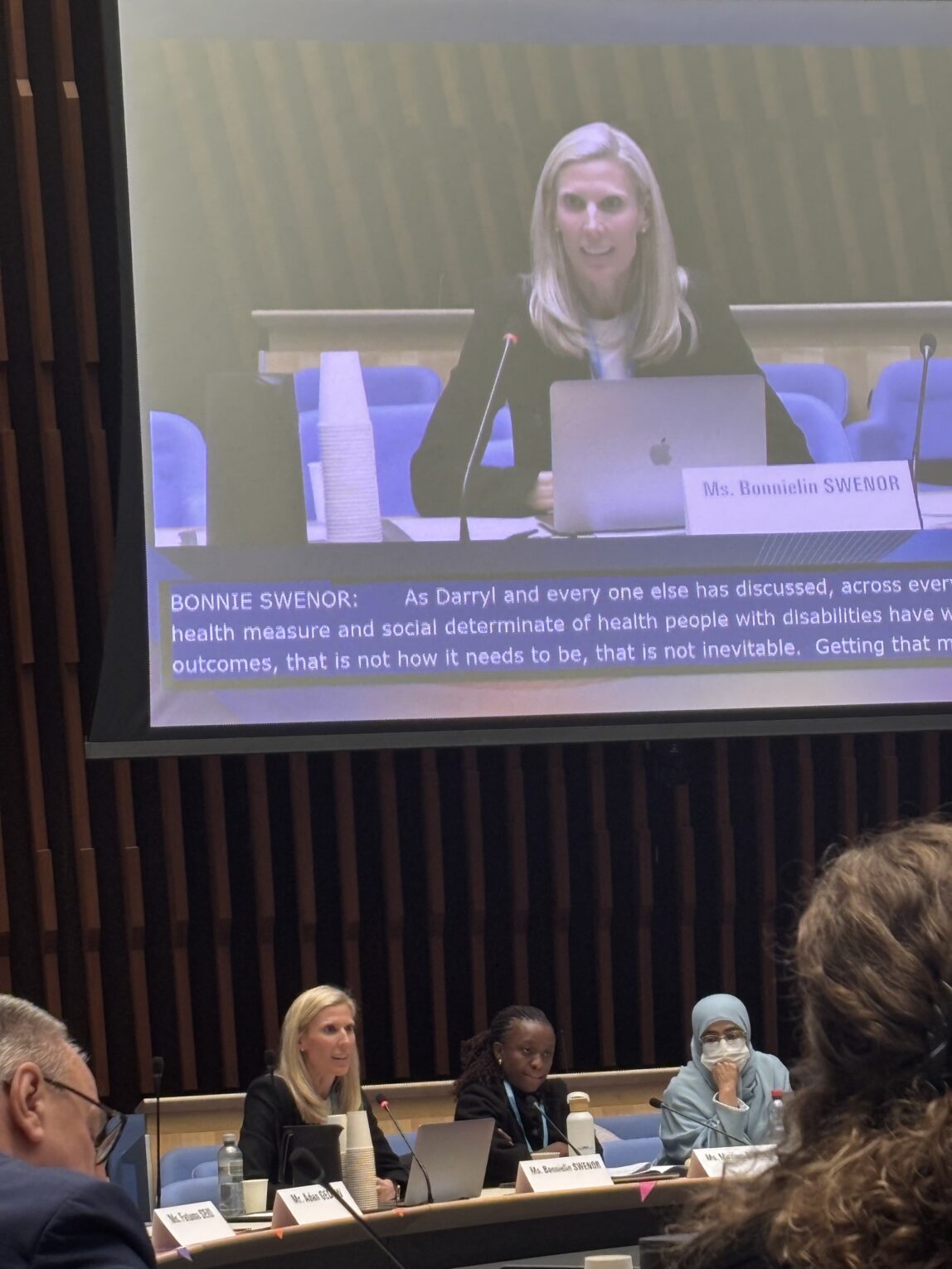
This fall, Dr. Swenor joined international partners and was a featured presenter at the inaugural meeting of the WHO Disability Health Equity Network, a new effort to elevate disability equity within global health agendas. The goal is bold: reshape how countries understand disability, strengthen how they measure health equity for people with disabilities, and ensure that disabled people play a central role in shaping the policies that affect their lives.
This work embodies the belief that leadership is not about responding to what exists now, but about anticipating what the future requires and preparing the people, the knowledge, and the systems that will bring that future to life.
In global rooms where decisions about health are made, Dr. Swenor is helping ensure that disabled voices are no longer absent, but leading.
Teaching What Tomorrow Demands
Inside the classroom, Dr. Swenor carries that same mission forward. She understands that the next generation of nurse leaders will inherit a health landscape that is more diverse, more interconnected, and more demanding than before. She sees disability equity as essential to that preparation and a core dimension of leadership.
Students learn to examine systems critically, to recognize exclusion where it has become normalized, and to design solutions that expand what is possible for all patients. They are not just learning to care; they are learning to lead.
Built for Impact
Dr. Swenor’s work is reshaping how we talk about disability, how we measure it, how we design systems around it, and how we prepare leaders to advance equity. It is the work of someone who does not see nursing and public health within narrow borders, but as a dynamic space where research, policy, community, and global action intersect.
Her message is unmistakable: change is possible when it is guided by vision and purposeful action. “The question isn’t whether we can build equitable systems,” says Dr. Swenor. “It’s whether we choose to.”
And her impact is equally clear. She is helping create a world in which disabled people are not afterthoughts but architects, and where policy is informed by lived experience and equity is not aspirational but expected.