
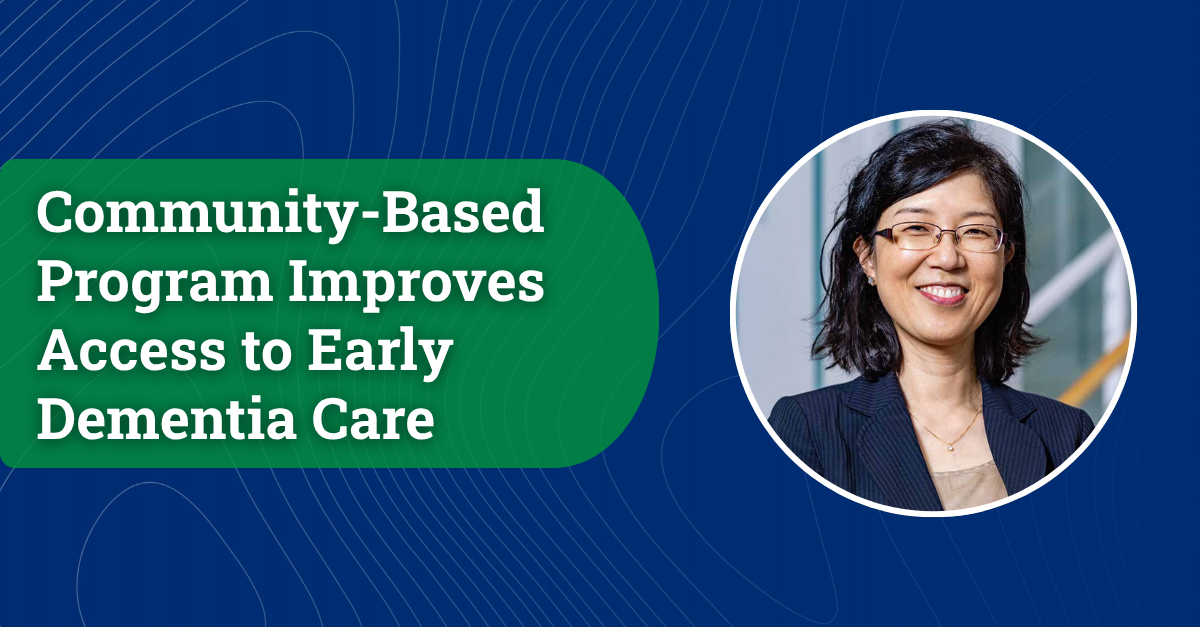
Johns Hopkins School of Nursing-led research demonstrates how culturally and linguistically tailored support can improve access to dementia care for Korean American older adults with limited English proficiency.
Early detection of dementia can help individuals and families access evaluation, treatment, and support sooner. Yet for many older adults with limited English proficiency, language barriers and the complexity of the health care system can delay access to timely dementia evaluation and care.
Early detection of dementia matters, especially now that disease-modifying treatments are available.
Hae-Ra Han, PhD, RN, FAAN, professor at the Johns Hopkins School of Nursing and lead author of the study.
Published in June 2026 in Alzheimer’s & Dementia, one of the leading international journals in the field of dementia research, the Preparing Healthy Aging through Dementia Literacy Education and Navigation (PLAN) study brought together researchers from New York University School of Medicine, the University of Rochester School of Medicine, Harvard Medical School, the Korean Community Service Center of Greater Washington, and the Korean Community Services of Metropolitan New York.
As the Korean American population in the United States continues to age, concern about dementia is growing. However, many Korean Americans continue to face significant barriers to early dementia screening and diagnosis due to language differences and the complexity of the health care system.
To help address these barriers and improve access to dementia care, the research team implemented the Preparing Healthy Aging through Dementia Literacy Education and Navigation (PLAN) program, a community-based dementia support program designed to increase the use of dementia-related health services among Korean older adults with suspected dementia who had not yet received a formal diagnosis, as well as their caregivers.
Trained Korean community health workers first conducted dementia screenings among approximately 2,700 Korean adults age 65 and older across Virginia, Maryland, Washington, D.C., New York, and New Jersey. Individuals with suspected dementia and their caregivers were then invited to participate in the PLAN program.
From 2021 to 2025, the study followed 287 older adults with suspected but undiagnosed dementia and their caregivers, representing more than 570 participants. Participants received education in Korean about the causes of dementia, the diagnostic process, treatment options, and how to access medical services. They also received six months of telephone counseling and resource navigation support.
After six months, approximately 17% of participants in the PLAN group had visited a health care facility for dementia evaluation and care, compared with none of the participants in the control group, who received general health information. Researchers found that support from community health workers who shared participants’ language and cultural background played an important role in improving access to dementia-related care for older adults and their caregivers with limited English proficiency. The findings demonstrate how culturally and linguistically tailored, community-based support can help reduce barriers to dementia care for populations with limited English proficiency.
“Our study shows that a community-based model using community health workers who speak the same language and understand the culture can improve access to dementia care for older adults with limited English proficiency, who might otherwise struggle along, not knowing where to turn for help,” Han said.
The findings highlight an effective community-based model that may help improve early dementia assessment, strengthen caregiving awareness, and reduce disparities in care among Korean Americans and other populations facing language barriers. The study demonstrates how community-based, culturally responsive approaches can help expand access to dementia care for underserved populations.
Han said she hopes the research will encourage health systems, policy makers, and community organizations to invest in programs that meet people where they are and provide timely, compassionate dementia care.