
By Jennifer Fink
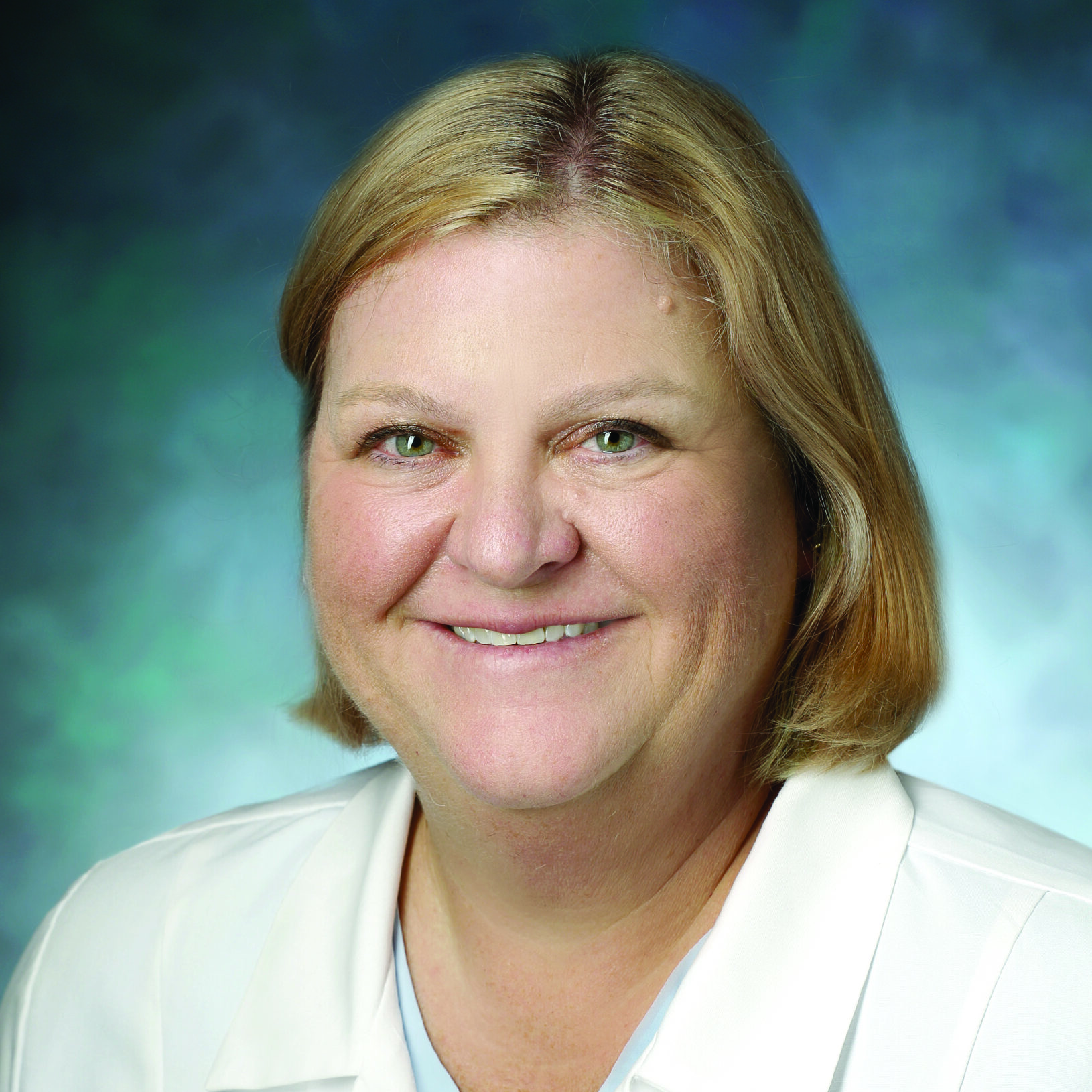
Courtney Cornell’s Climb to Suburban CNO
Courtney Cornell, MSN, RN, OCN, didn’t plan to be a nurse.
In fact, she probably wouldn’t be a nurse today—much less vice president of nursing and chief nursing officer of Suburban Hospital—if not for the example of a few special nurses. And an anaphylactic reaction on the side of a Colorado mountain.
Cornell, a Chicago native, was on ski patrol that fateful day. She’d recently dropped out of college, moved to Colorado to work as a ski instructor, and was picking up patrol shifts to make ends meet. She and her patrol partner were called to the resort’s restaurant to care for a man in the throes of a severe allergic reaction. Cornell’s partner, a nurse, quickly administered epinephrine. Within minutes, the man’s breathing stabilized.
“I thought that was the coolest thing I’d ever seen,” Cornell recalls. “The next fall, I enrolled in nursing school.”
An Uncommon Path
But although Cornell loved her nursing theory and science courses, she struggled in clinicals.
“Some of the stuff that was being asked just wasn’t realistic in my mind,” she says. After two semesters, she told her clinical instructor she was quitting. His answer: No, you’re not.
Cornell’s instructor recognized that she was an independent thinker who thrived in fast-paced settings. So, he created a critical care clinical path for her, allowing her to gain experience in PICU, ICU, and ED settings. Cornell thrived—and still nearly didn’t become a nurse. After a missed flight home from an adventure in Nicaragua cost her the first two days of her senior practicum and triggered consequences she felt were unreasonable, Cornell told her parents she wasn’t going to take her board certification exam.
Her dad, a hospital consultant, talked her into sitting for her boards and, after she passed, one of his clients encouraged Cornell to follow her interests and apply for an ICU position, even though new grads in those days typically weren’t considered for intensive care positions. To her surprise, Cornell landed an ICU job and started her nursing career at Hospital Center in Washington DC.
“That’s when I fell in love with nursing,” Cornell says.
Finding Her Home
Cornell moved to Suburban Hospital in 1996, shortly after her oldest child was born. It was a move intended to ease family logistics. “I was driving past a bunch of hospitals on my way to Hospital Center,” Cornell explains. “My goal was to never drive by another hospital on my way to work again.”
What she found at Suburban was far more than convenience, however. Suburban Hospital became her professional home.
Cornell started as a staff nurse in the ICU. When a nursing supervisor asked if she’d consider working in supervision, Cornell seized the opportunity.
“My dad taught me that sometimes you should walk through open doors, even though you’re not sure what’s on the other side,” she says. “I thought that if I said no to that opportunity, I might not get it again.”
Cornell quickly saw that leadership allowed her to effect change on a larger scale. “I realized I could have a much greater impact by not caring for patients directly but by taking care of staff,” she says.
Her experience had taught her that good things happen when you put the right nurses in the right environment, with the right resources. And her time in critical care and emergency settings prepared her well for a career in management. She was adept at pivoting and multi-tasking, a pro at remaining cool, collected, and focused, even in high-stress situations.
Cornell gradually assumed more responsibility. Over the years, she directed several inpatient units, including adult and acute medical surgical, adult surgery, orthopedics, and oncology. She oversaw nursing operations at Suburban before stepping into the role of vice president of nursing and chief nursing officer in September 2024—a role she never envisioned for herself when she walked into the ICU three decades earlier.
“When people ask me why I’ve stayed at Suburban so long, I always tell them, ‘I’ve never had a reason to leave,’ ” Cornell says.
Leading Through Change
It’s taken time for Cornell to adjust to her new role.
“I thought I knew what I was getting into, but I very quickly realized I had no idea what this job was,” Cornell says. Learning the ins and outs of hospital finance has been a challenge. A year in, she has a better understanding of the capital budget, business acronyms, and the fiscal impact of nursing.
She is proud of the way she and Suburban’s staff worked together to manage “unprecedented volume” over the past year.
“We created a discharge lounge—something we’ve tried to do multiple times before but weren’t successful at—to free up space in our ED,” Cornell says. “Instead of waiting in an ED bed for a ride home, 80 to 95 percent of our eligible discharges now go through that lounge.”
“My dad taught me that sometimes you should walk through open doors, even though you’re not sure what’s on the other side.”
Cornell stays in close touch with frontline nurses because she knows they have the clearest view of day-to-day challenges.
“Bedside nurses are like MacGyver,” she says, referencing the ’80s/’90s TV character who improvised impressive, innovative solutions to sticky problems on a weekly basis. “They’ll find a workaround until they can’t find a workaround.” And while Cornell appreciates the passion, persistence, and ingenuity that underly nurses’ creative problem-solving, she knows it’s almost always better (and safer) to tackle root causes than to rely on stopgap solutions that conceal issues instead of resolving them.
“If you find out about a problem after the fifth workaround, you’re already in deep,” Cornell says. Best to learn about problems early on and solicit nurses’ input to create cohesive, cost-effective, evidence-based solutions that alleviate the issue and improve care.
Cornell’s enthusiasm for nursing hasn’t flagged a bit. “I’m as excited in my role today as I was as a new grad in the ICU,” she says. “It’s an exciting time for the organization and for nursing.”