




Public housing wallpaper inspired by Baltimore interviews and archival images salutes urban caregivers as it celebrates the resilience of those who came before.
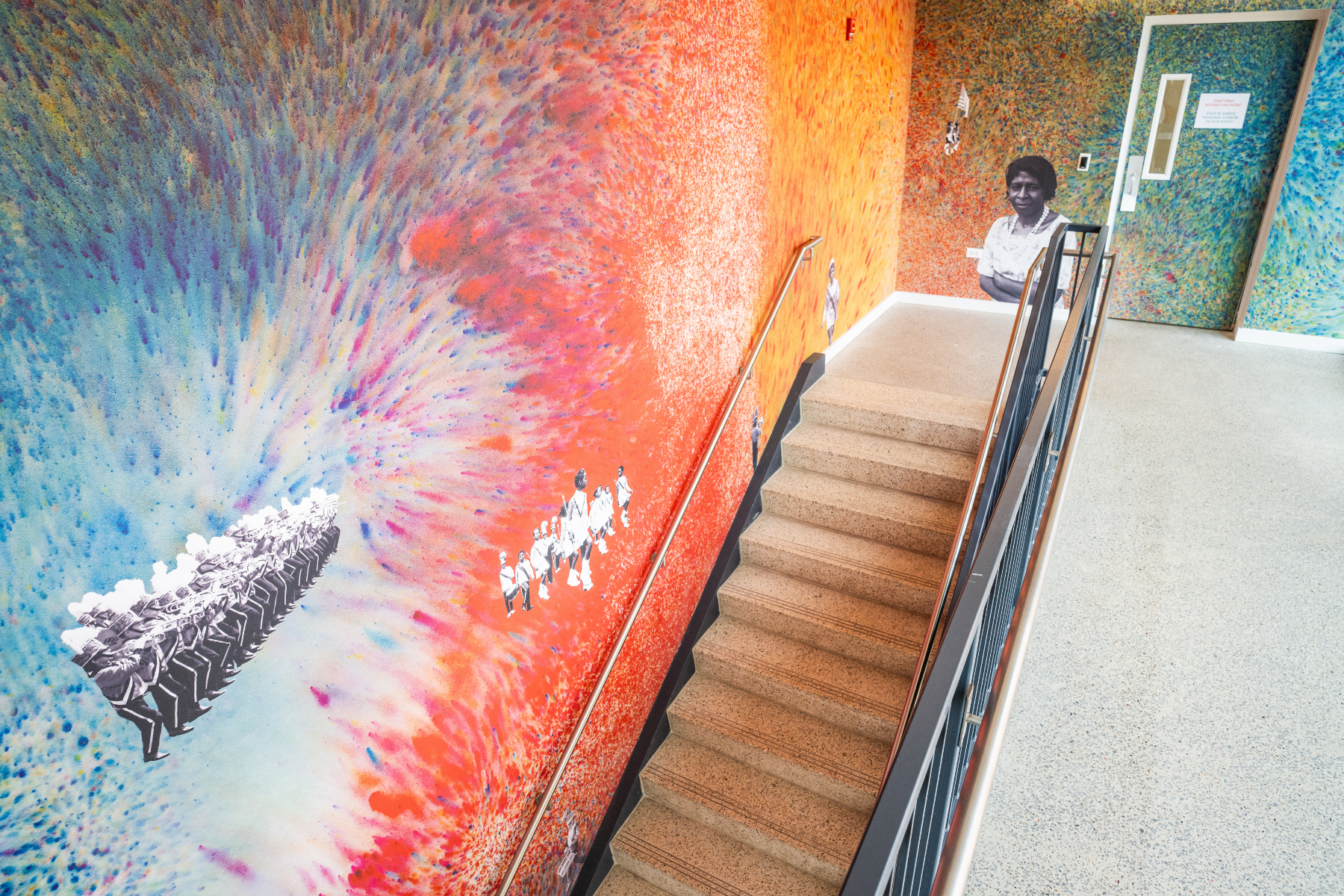
There is beauty in public housing, particularly as represented by low-income women who historically have emerged from a backdrop of poverty and disenfranchisement to push for what’s right, right where they are. An exhibit filling the Public Housing Museum in Chicago celebrates what these leaders have always meant to their communities through bold wallpaper featuring scenes of joy and life from the inner-city Baltimore of the 1960s and 1970s.
Re/Creation, by artist Marisa Morán Jahn, was inspired by the work of Dean Sarah Szanton, PhD, RN, FAAN, and her team of nurse practitioners, who fanned out with community developer Micah Campbell-Smith and Morán Jahn to find and interview such leaders about their own resilience and efforts to undermine structural discrimination in that era.
Szanton’s team aims to recapture that community spirit as part of improving dementia care among impoverished Baltimoreans and expanding the Johns Hopkins’ Neighborhood Nursing program, a free, door-to-door, block-by-block effort to keep residents well and prevent issues that might previously have led to unnecessary emergency room visits.
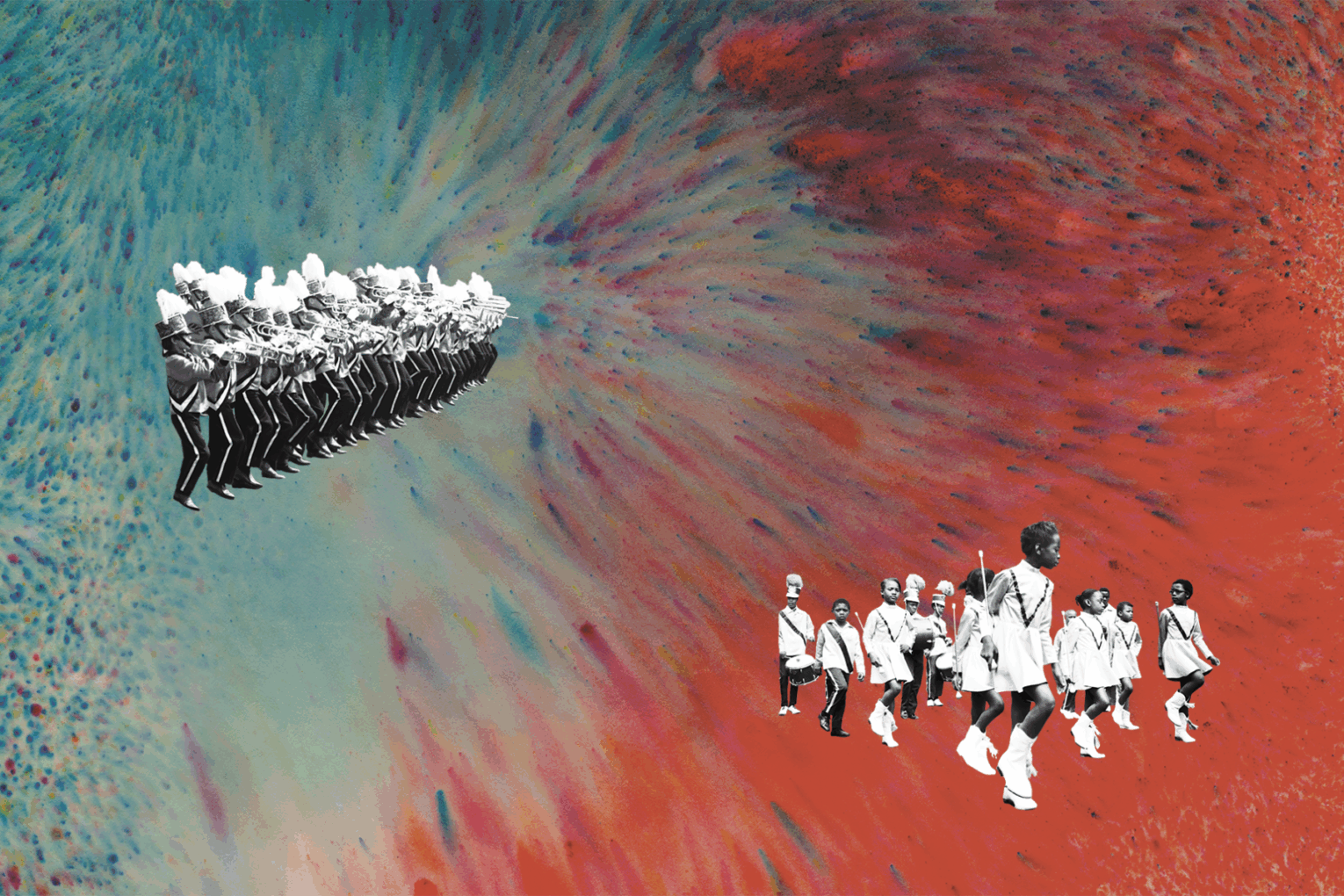
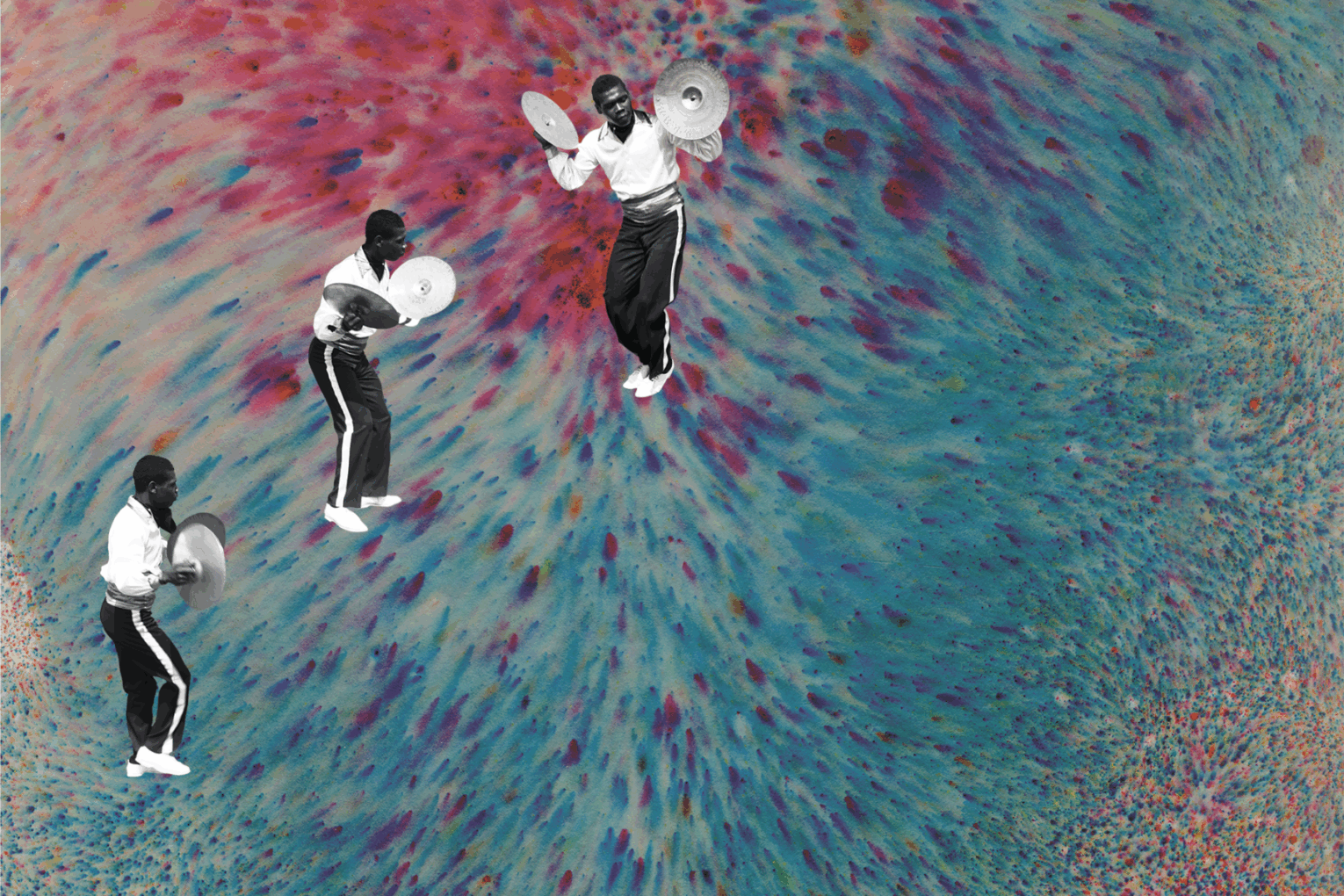
The exhibit name is a play on recreation, as well as on how these women helped reimagine, or re-create, their communities’ reality. The Baltimore images, courtesy of the Robert Breck Chapman Archive at the University of Baltimore, are of dancers, marching bands, and ballplayers. These move and sway against brilliant swaths of color as wallpaper for the halls and stairwells of the Public Housing Museum. Snippets of the wallpaper currently hang in the lobby of the Johns Hopkins School of Nursing.
Learn more about the grant that inspired Re/Creation at nursing.jhu.edu/recreation. Or listen to a podcast on the program at nursing.jhu.edu/recreationpod.
Inspiration for ‘Re/Creation’
JHSON-led grant works to foster hope and resilience by addressing racial disparities on dementia
The research grant that inspired Re/Creation, an art project that salutes women leaders of movements to improve lives in public housing communities, involves an effort to change a damning statistic to optimize dementia care for all.
From the National Institute on Aging grant, “Reducing Racial Disparities in AD/ADRD: Addressing Structural Discrimination and Resilience,” led by Dean Sarah Szanton, PhD, RN, FAAN:
African Americans are more than twice as likely to have Alzheimer’s disease/Alzheimer’s disease related dementias (AD/ADRD) as Whites. This is a preventable gap. The simple yet innovative long-term vision of this LEADR proposal is to erase racial disparities in AD/ADRD burden. In this project, we will 1) develop a measure of structural discrimination and resilience, 2) use it to predict outcomes in AD/ADRD and 3) develop interventions to decrease prevalence and increase resilience. Understanding how to equalize the Black and White AD/ADRD burden will reveal mechanisms that will optimize prevention and care for all.
And the JHSON-led research group believes it can do much more than unequivocably document a problem.
With historical data, innovative approaches, and a commitment to addressing this disparity, we can achieve this objective. …
Although structural discrimination and resilience are relevant to AD/ADRD and function, there are currently no measurement instruments. … This instrument will measure eight dimensions of structural discrimination and resilience plus family support, greenspace, and social connection. Zip codes across the lifespan will be used to merge historical data to measure multiple risk or protective factors such as school district funding, environmental toxins, and amount of accessible greenspace. We will construct the instrument with older adults and researchers, cognitively test, pilot test, refine and then field the instrument in national datasets supported by the NIH.
Interventions will follow, as will “significant side benefit”:
Because many other conditions related to structural discrimination are also on the causal pathway to AD/ADRD, this effort will also enhance our understanding of hypertension, stroke, heart disease, and other inflammatory diseases. The project uses the distinct strengths of the applicant, the outstanding research environment, and existing NIA resources to work towards solving crucial disparities that tax families and society.