
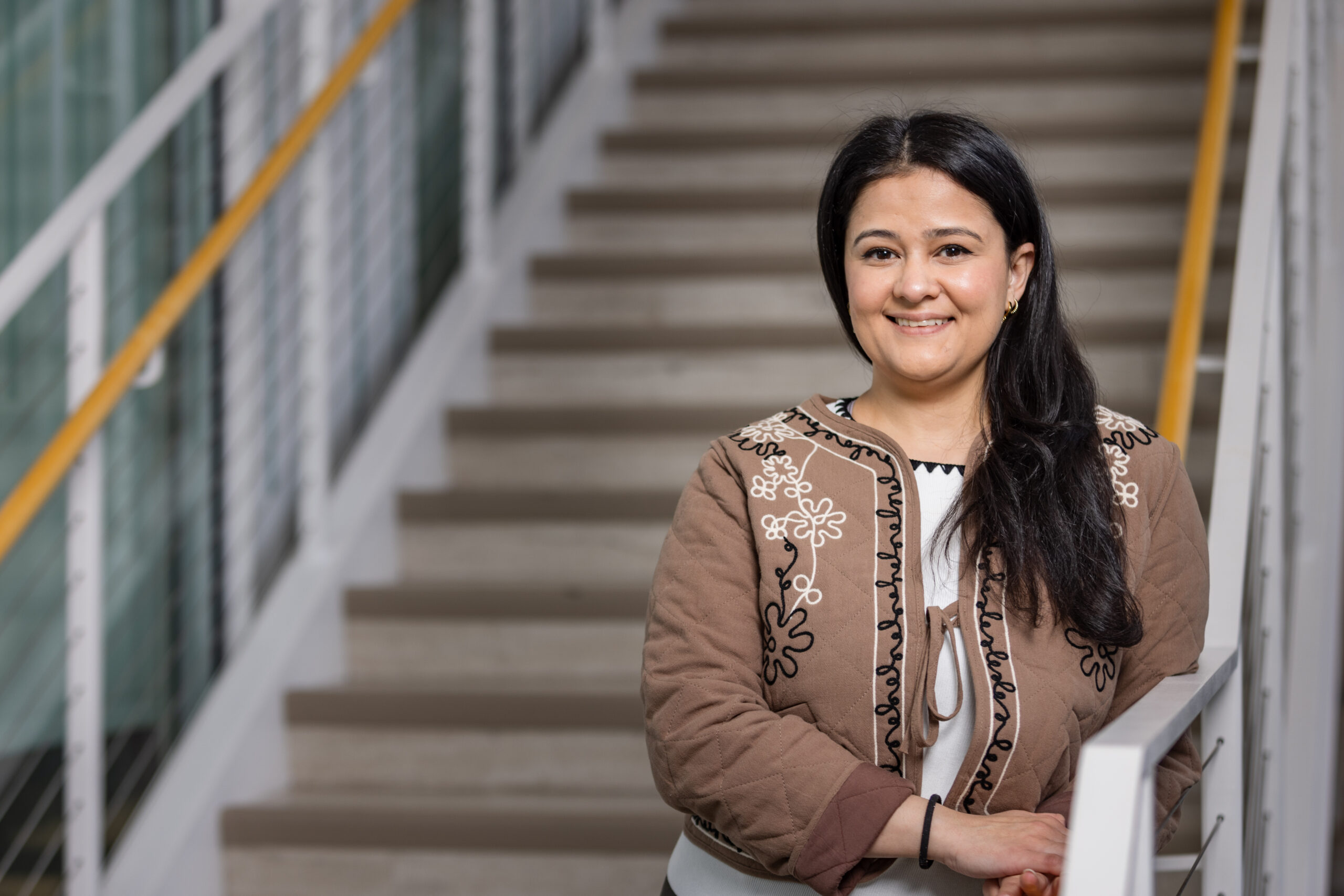

Focus: With or without federal funding, Laura Mata López has earned the trust of her community.
When her NIH F31-Diversity Predoctoral Fellowship was suddenly terminated by the federal government this past April, the community-based research Laura Mata López had spent more than two years co-developing with Latina immigrant women was threatened.
She wasn’t surprised by what followed. Political decisions that harm immigrant communities are not new to her, and seeing her life’s work pulled into a legal and political fight that reached the Supreme Court carried a weight that was both predictable and painful. “It all felt so personal, and so hopeless,” she says.
Her study, the first NIH-funded project focused specifically on suicide prevention and suicide survivorship among Latina immigrants, is grounded in experiences she knows too personally. As a psychiatric nurse, she carries the stories of patients she has lost to suicide. As a Latina immigrant who immigrated to the United States from Costa Rica at age 12, she also brings her own experience as a suicide survivor to this work. Together, these experiences shape the way she moves through her science, with a steady respect for the depth, complexity, and often-unseen realities of Latina immigrant women.

When she learned that her award had been terminated, her mind went immediately to the women who had shaped the project with her. The Community Advisory Board (CAB), a group of local Latina immigrant women who have co-developed all aspects of the study from the start, deserved transparency, even if the news felt difficult to share.
The first CAB member simply asked, “What can we do to make the research still happen?” Others responded the same way. They had spent two years building this project alongside her; it was as much theirs as hers. Federal funding or not, they were committed to keeping it alive.
Their next step is to launch a community-based survey shaped by and for Latina immigrant women, designed to identify the risk and protective factors for suicide in their community. It will be the first dataset of its kind.
Johns Hopkins University, for its part, has pledged to support Mata López’s research, despite ongoing federal cuts, allowing the project to move forward. In the meantime, she has continued working alongside the community to build on the momentum they had already created, while helping strengthen the work in ways that can grow into a sustainable, community-led effort.
And so, the project continues, guided by the steady co-leadership of the women at its center.